0-Spring核心模块解析—Resource与ResourceLoader接口
原文:CSDN(历史文章导入,当前状态为草稿)
Resource你不得不知的事情
Section titled “Resource你不得不知的事情”我们为什么要学习Spring下面的Resource模块?
首先我们要了解什么是资源,我们把资源来自于几个方面:比如spring中xml配置文件,url网络上不同渠道的资源,自建的properties文件等,程序对于这些资源的访问,被称之为资源访问。
我们在学习spring之前,接触过一些资源访问API,比如InputStream等文件的IO,java.net.URL。
首先,它们都不是专门为Web服务设计的,对于Spring服务,这些工具比较底层,直接使用这些方法,首先要编写更多额外的代码,比如文件是否存在的判断,路径转换。
其次,他们对于访问底层资源的能力不够,没有一种URL的实现可以访问需要从类路径的资源或者相对于ServletContext获得的资源,虽然可以为专门的URL前缀注册新的处理程序(类似于现有的用于前缀的处理程序:如http:),但是比较复杂。而且URL缺少需要的一些功能,比如检查被指向的资源是否存在的方法(上面提到过,原理在于,URL表示一个统一的资源定位符,一个指向互联网上“资源”的指针,较于Resource更侧重于web资源,而Resource是实现资源的抽象,可以检查资源是否存在)。
Spring整合了获取资源的工具,统一读取例如本地文件,classpath项目路径下的文件,url互联网上的文件等不同渠道的资源,也封装了打开流,关闭流,报错处理等大量重复模板的代码,专程设计Resource接口类。
Resource内容
Section titled “Resource内容”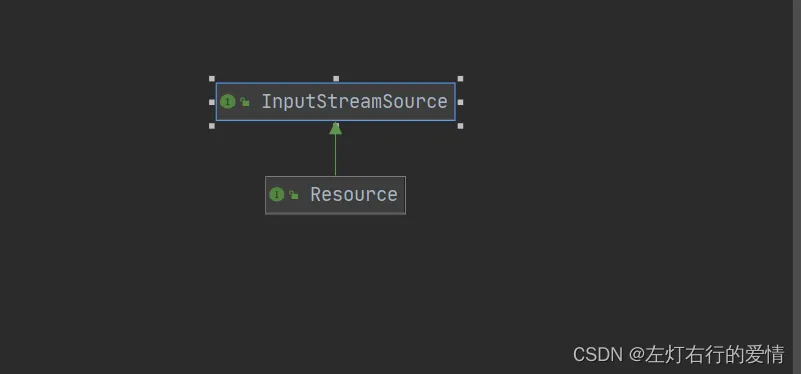
代码如下:
public interface Resource extends InputStreamSourceInputStreamSource接口:spring核心工具包输入流接口,该接口只有一个抽象方法,每次调用这个方法都会得到一个新的流。
public interface InputStreamSource { InputStream getInputStream() throws IOException;} * Interface for a resource descriptor that abstracts from the actual * type of underlying resource, such as a file or class path resource. *从实际类型的底层资源(例如文件或类路径资源)中抽象出来的资源描述符的接口boolean exists();//返回Resource所指向的底层资源是否存在
default boolean isReadable() { //返回当前Resource代表的底层资源是否可读 return exists(); }default boolean isOpen() { //返回Resource资源文件是否已经打开,如果是,则只能被读取一次然后关闭以避免内存泄漏 //常见的Resource实现一般都返回false return false; }//如果当前Resource代表的底层资源能由java.util.URL代表,则返回URL,否则抛出io异常 URL getURL() throws IOException;//如果当前Resource代表的底层资源能由java.util.URI代表,则返回该URI,否则抛出io异常 URI getURI() throws IOException;// 如果当前Resource代表的底层资源能由java.io.File代表,则返回FIle,否则抛出io异常 File getFile() throws IOException;
//返回当前Resource代表的底层资源的长度,一般是值代表的文件资源的长度。 long contentLength() throws IOException;
//返回当前Resource代表的底层资源的最后修改时间。 long lastModified() throws IOException; @Nullable //返回当前Resource代表的底层文件资源的文件路径,比如File资源“file://E:/hao/wang.txt”将返回“E:/hao/wang.txt” //如果是URL资源,无论地址是多少,都返回"",因为只会返回文件路径。 String getFilename();//返回当前Resource代表的底层资源的描述符,通常是资源的全路径(实际的文件名或实际的URL地址) String getDescription();重要的内置Resource实现
Section titled “重要的内置Resource实现”先看一下Resource接口的子类都有什么:
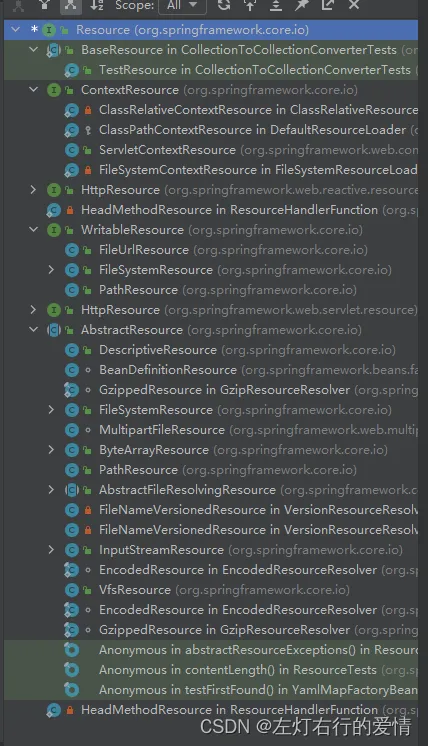
我们简单看一看Spring内提供的比较重要常用的Resource实现:
- UrlResource
- ClassPathResource
- FileSystemResource
- ServletContextResource
- InputStreamResource
- ByteArrayResource
- 等等。。
UrlResource
Section titled “UrlResource”代表URL资源,用于简化URL资源访问,对java.net.URL进行了包装。该方法接受一个表示路径的字符串参数,它把不同来源的资源抽象成URL,通过注册不同的handler来处理不同来源的资源的读取逻辑。一般不同类型使用不同的前缀。
isOpen 永远返回false,表示可多次读取资源。
UrlResource应该提供标准的协议前缀,一般支持如下资源访问:
- http:通过标准的http协议访问web资源
- ftp:通过ftp协议访问资源
- file:通过file协议访问本地文件系统资源
缺点:
UrlResource无法解决相对于classPath路径或servletContext的处理方法,因此需要其他的Resource实现类。
ClassPathResource
Section titled “ClassPathResource”代表classPath路径的资源,使用ClassLoader加载资源。
其主要优势就是方便访问类加载路径下的资源,尤其是Web应用,因为它可以自动搜索位于WEB-INF/classes下的资源文件。
classPath资源位于类路径中的文件系统中或jar包里,且isOpen永远返回false,表示可多次读取资源。
ClassPathResource加载资源替代了Class类和ClassLoader类的getResource(String name)和getResourceAsStream(String name)两个加载类路径资源方法,提供一致的访问方式。
ClassPathResource提供了三个构造器:
- public ClassPathResource(String path):使用默认的ClassLoader加载Path类路径资源;
- public ClassPathResource(String path,ClassLoader classLoader):使用指定的ClassLoader加载“Path”类路径资源;
- public ClassPathResource(String path,Class<?> clazz):使用指定的类加载“path”类路径资源,将加载相对于当前类的路径的资源。
FileSystemResource
Section titled “FileSystemResource”代表了java.io.File资源,对于getInputStream操作将返回底层文件的字节流,isOpen将永远返回false,从而表示可以多次读取底层文件的字节流。
ServletContextResource
Section titled “ServletContextResource”访问Web Context下相对路径下的资源,入参的资源位置是相对于Web应用根路径的位置(工程文件夹下,WEB-INF所在的那级文件夹)。用于简化servlet容器的ServletContext接口的getResource操作和getResourceAsStream操作。
使用ServletContextResource无需关心资源是否被解压缩出来,或者直接存放在JAR文件中,都可以通过Servlet容器访问。
接受的参数为ServletContext和字符串类型
InputStreamResource
Section titled “InputStreamResource”代表java.io.InputStream字节流,对于getInputStream操作将直接返回该字节流,因此只能读取一次该字节流,即isOpen永远返回true(其他Resource大都为false可以多次读取)。
只有当没有合适Resource实现时,才考虑使用InputStreamResource。一般考虑使用ByteArrayResource。参数需要InputStream类型。
如果需要将资源描述符保存在某个地方或者需要多次读取流,不要使用。
ByteArrayResource
Section titled “ByteArrayResource”可以多次读取数组资源,即isOpen永远返回false
参数需要byte[]字节数组类型,用途比较广泛,可以把网络或者本地资源转换为byte[]类型,然后用ByteArrayResource转化为资源,而且不必依赖一次性使用的InputStreamResource。
ResourceLoader内容
Section titled “ResourceLoader内容”前面我们了解到了,Spring整合获取资源的工具,就是使用Resource接口。此接口是Spring为了统一读取本地文件,类路径下面文件(ClassPath),网络等不同类型渠道的资源,封装隐藏如打开流,关闭流等大量重复模板代码,专程提供的接口类。
那么,Spring框架为了更方便的获取资源,全力弱化使用者对各个Resource接口实现类的学习与使用成本,设计目的为了快速返回(加载)Resource实例对象,定义了另一个接口,ResourceLoader接口。
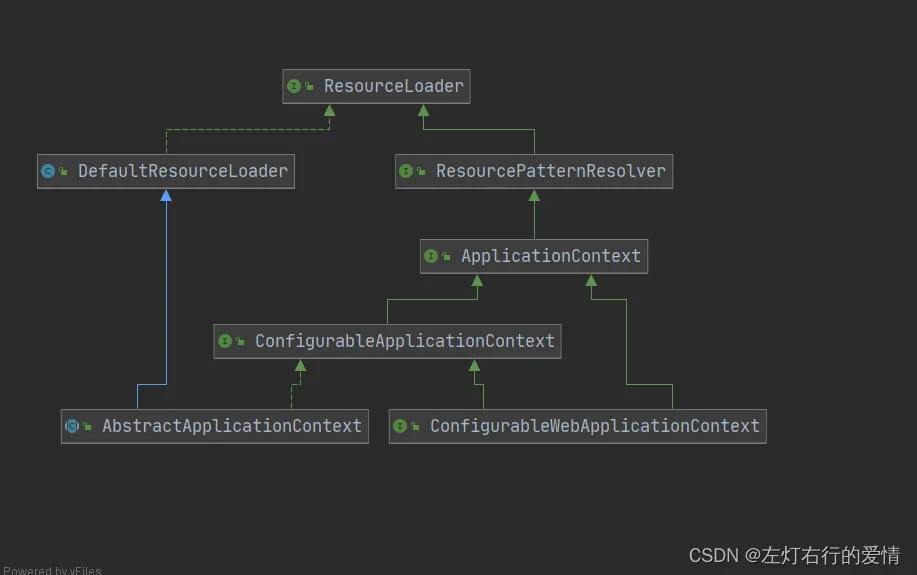
我们可以看见比较熟悉的内容:
1.ApplicationContext–上下文容器,这里说明高级容器(应用上下文容器)也是实现了ResourceLoader接口的,其本身就是一个ResourceLoader,所以说高级容器都可以根据资源地址类型快速获取对应的Resource实例。
2.资源获取策略的顶级接口–ResourceLoader接口
3.ResourcePatternResolver–扩展ResourceLoader,可以批量加载Resource对象。
public interface ResourceLoader {
    //支持ClassPath:类型的路径匹配  String CLASSPATH_URL_PREFIX = ResourceUtils.CLASSPATH_URL_PREFIX;
    //根据路径信息返回一个对应的Resource资源实例  Resource getResource(String location);
    //获取当前使用的ClassLoader,对外暴露,让ResourceLoader可以使用自定义的ClassLoader  @Nullable  ClassLoader getClassLoader();
}
我们可以看到,ResourceLoader接口有默认实现类——DefaultResourceLoader类
DefaultResourceLoader类实现了ResourceLoader接口加载资源的方法,同时也扩展了一些通用的基本操作方法,其中最重要的就是实现了getResource(String location)方法,我们看一下里面重要的实现方法的源码,其他不是重点,有兴趣额外了解吧:
@Override  public Resource getResource(String location) {    Assert.notNull(location, "Location must not be null");          //ProtocolResolver:用户自定义协议资源解决策略,看看用户是否有提前自定义    for (ProtocolResolver protocolResolver : getProtocolResolvers()) {      Resource resource = protocolResolver.resolve(location, this);      if (resource != null) {        return resource;      }    }        //如果用户没有自定义策略,就用以下自定义资源解析策略        //如果是“/”打头,就构造并返回ClassPathResource    if (location.startsWith("/")) {      return getResourceByPath(location);    }    //如果以“ClassPath:”打头也会构造构造并返回ClassPathResource在构造资源时还会获取类加载器    else if (location.startsWith(CLASSPATH_URL_PREFIX)) {      return new ClassPathResource(location.substring(CLASSPATH_URL_PREFIX.length()), getClassLoader());    }    //如果上述方式无法构造,则构造URL地址,并尝试通过URL进行资源定位,若没有就抛出异常    //然后判断是否为FileURL,如果是就返回FileUrlResource,否则就构造UrlResource    //若是加载的过程中抛错,委派getResourceByPath来实现资源定位和加载    else {      try {        // Try to parse the location as a URL...        URL url = new URL(location);        return (ResourceUtils.isFileURL(url) ? new FileUrlResource(url) : new UrlResource(url));      }      catch (MalformedURLException ex) {        // No URL -> resolve as resource path.        return getResourceByPath(location);      }    }  }
我们来看一下这个return的方法
  protected Resource getResourceByPath(String path) {    return new ClassPathContextResource(path, getClassLoader());  }
  protected static class ClassPathContextResource extends ClassPathResource implements ContextResource {    public ClassPathContextResource(String path, @Nullable ClassLoader classLoader) {      super(path, classLoader);    }    //其他代码省略    }

我们上面已经了解过了ClassPathResource(path,classLoader)使用指定的ClassLoader加载“Path”类路径资源;相信看到这里你已经明白了。
ResourcePatternResolver内容
Section titled “ResourcePatternResolver内容”对于ResourcePatternResolver接口来说,除了继承自Resource方法外,ResourcePatternResolver额外扩充了一个方法,就来批量加载Resource资源对象,源码如下:
public interface ResourcePatternResolver extends ResourceLoader {
  //支持classpath*:形式路径匹配,即Ant风格  String CLASSPATH_ALL_URL_PREFIX = "classpath*:";
   //批量加载Resource资源类型的实现  Resource[] getResources(String locationPattern) throws IOException;
}
ResourcePatternResolver接口的默认实现类——PathMatchingResourcePatternResolver类
这里全部列出没什么必要,因为PathMatchingResourcePatternResolver实例化了一个ResourceLoader,继承的ResourceLoader中方法都委托给了内部的ResourceLoader对象去处理。
对于PathMatchingResourcePatternResolver只负责实现处理ResourcePatternResolver中的方法,这里主要是实现getResources(String locationPattern)方法。
源码如下:
public class PathMatchingResourcePatternResolver implements ResourcePatternResolver {
private final ResourceLoader resourceLoader;
private PathMatcher pathMatcher = new AntPathMatcher();
public Resource[] getResources(String locationPattern) throws IOException //有点复杂,知道有这个就行,感兴趣自己查一下。
}
我们在上面可以看到,PathMatchingResourcePatternResolver引入了一个新的组件PathMatcher,
这个PathMatcher负责对基于字符串的路径和指定的模式符号进行匹配。
对于这个接口PathMatcher而言,它被翻译为路径匹配模板解析器,先用模板解析器对路径进行解析,分解成多个资源配置文件,将资源信息提供给资源加载器,后者根据不同策略将配置文件形成不同类型的资源。
容器与Resolver关系
Section titled “容器与Resolver关系”我们从Application源码中可以看到,接口继承了ResourcePatternResolver接口,也就是说,ApplicationContext本身也是一个模板解释器和资源加载器,是模板解释器的具体实现,是支持Ant风格路径匹配和批量加载资源的一个资源加载器。

我们来好好分析一波里面的继承关系:
ApplicationContext的抽象实现类AbstractApplicationContext在实现了ConfigurableApplicationContext的基础上,同时继承了ResourceLoader的实现类DefaultResourceLoader,如下图:

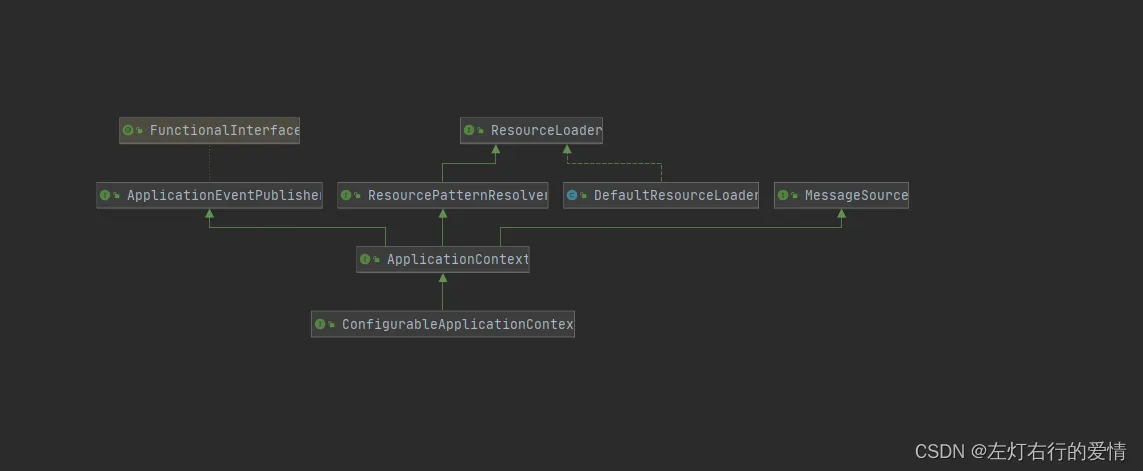
我们看上图可以发现,实现ConfigurableApplicationContext也意味着实现了ResourcePatternResolver,但是为什么要继承一个DefaultResourceLoader?显然spring设计人员不想将资源解释的逻辑直接暴露在容器中,这里将解析逻辑与容器的实现进行了解耦。
在AbstractApplicationContext的构造函数源码中可以看到,在这里将ResourcePatternResolver接口的实例——PathMatchingResourcePatternResolver实例进行了初始化,并且传入的resourceLoader实例,就是容器本身(容器继承了DefaultResourceLoader),也就是容器进行了献祭,来实现资源解释器。
我们看一下源码里面内容:
public abstract class AbstractApplicationContext extends DefaultResourceLoader    implements ConfigurableApplicationContext {  /** ResourcePatternResolver used by this context. */  private ResourcePatternResolver resourcePatternResolver;
  /**   * Create a new AbstractApplicationContext with no parent.   */  public AbstractApplicationContext() {    this.resourcePatternResolver = getResourcePatternResolver();  }
  protected ResourcePatternResolver getResourcePatternResolver() {    return new PathMatchingResourcePatternResolver(this);//这里传入了容器本身  }//省略其他代码}
最后一张图总结一下:
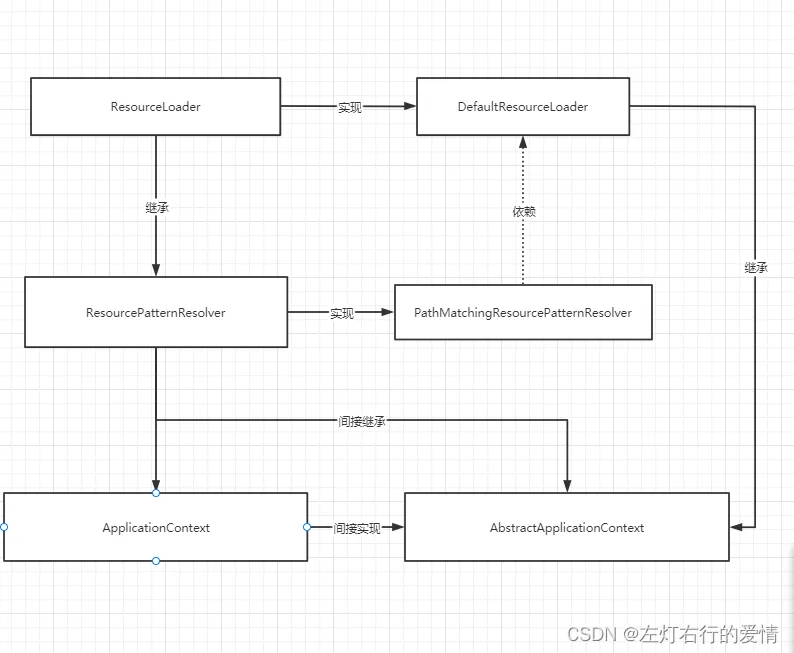
对于AbstractApplicationContext我们需要注意几点:
1.AbstractApplicationContext因为继承了DefaultResourceLoader,所以AbstractApplicationContext本身就是resourceLoader。
2.AbstractApplicationContext实现了ResourcePatternResolver接口:实现逻辑使用PathMatchingResourcePatternResolver进行委派,PathMatchingResourcePatternResolver实例化时需要传入resourceLoader实例,就将容器本身传进去了
3.所以容器本身即是resourceLoader实例,也是resourcePatternResolver实例。
后面有精力联动一下Resource里面涉及到的装饰模式还有在项目中的用法。