并发编程JUC深度学习(二)进程与线程(源码描述部分)
原文:CSDN(历史文章导入,当前状态为草稿)
Thread源码解析
Section titled “Thread源码解析”本文着重分析代码,理清里面的逻辑,我们主要分析Thread。
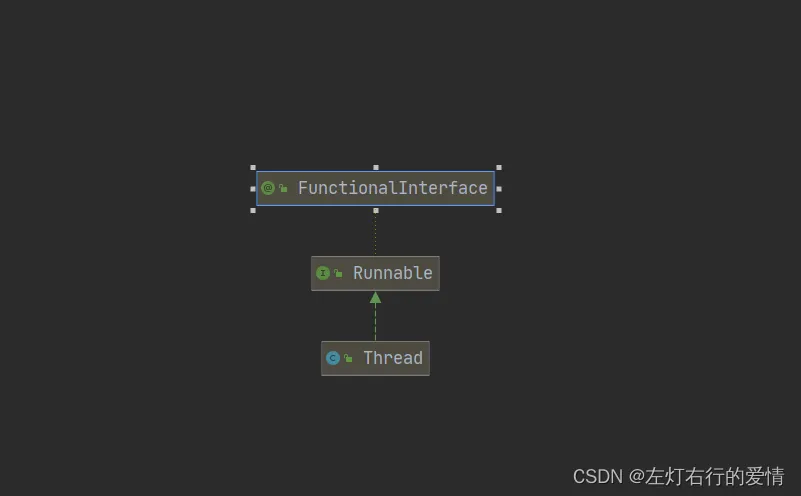
代码实现:
publicclass Thread implements RunnableThread类实现了Runnable,我们也在前文提到过,需要启动一个线程,需要继承Thread或者实现Runnable接口,本质来说都是实现了Runnable接口。
/** * A <i>thread</i> is a thread of execution in a program. The Java * Virtual Machine allows an application to have multiple threads of * execution running concurrently. * <p> * thread是程序中执行的线程,Jvm允许在一个程序中分配多个线程并发执行 * * Every thread has a priority. * 每个线程都有优先级 * Threads with higher priority are executed in preference to threads with lower priority. * 那些具有较高优先级的线程会优先于较低优先级的线程执行 * Each thread may or may not also be marked as a daemon. * 每一个线程都可以标记为守护线程 * When code running in some thread creates a new {@code Thread} object, the new thread has its priority initially set equal to the priority of the creating thread, and is a daemon thread if and only if thecreating thread is a daemon.当运行在某个线程中的代码创建一个新的线程对象时,新的线程最初优先级与线程优先级相等,当且仅当创建线程是守护线程的时候,被创建的新线程才是守护线程 * <p> * When a Java Virtual Machine starts up, there is usually a single * non-daemon thread (which typically calls the method named * {@code main} of some designated class). * 当JVM启动的时候,通常有一个单独的非守护线(通常调用main方法所在的类命名) * The Java VirtualMachine continues to execute threads until either of the following * occurs: * Java虚拟机会继续执行线程,直到出现如下情况: * <ul> * <li>The {@code exit} method of class {@code Runtime} has been * called and the security manager has permitted the exit operation * to take place. * 运行时Runtime调用exit方法,安全管理器允许执行退出操作 * <li>All threads that are not daemon threads have died, either by * returning from the call to the {@code run} method or by * throwing an exception that propagates beyond the {@code run} * method. * 所有不是守护线程的线程都"死"了,要么从调用run的方法返回,要么抛出一个run方法之外的异常 * </ul> * <p> * There are two ways to create a new thread of execution. * 通常有两种方式创建一个线程 * One is to declare a class to be a subclass of {@code Thread}. * 一种是继承Thread类 * This subclass should override the {@code run} method of class {@code Thread}. * 子类应该重写run方法 * An instance of the subclass can then be allocated and started. * 然后子类的实例是可分配的并启动 * For example, a thread that computes primes larger than a stated value could be written as follows: * 例如,计算质数的线程大于指定值可写成: * <hr><blockquote><pre> * class PrimeThread extends Thread { * long minPrime; * PrimeThread(long minPrime) { * this.minPrime = minPrime; * } * * public void run() { * // compute primes larger than minPrime * . . . * } * } * </pre></blockquote><hr> * <p> * The following code would then create a thread and start it running: * 然后通过如下代码来创建线程 * <blockquote><pre> * PrimeThread p = new PrimeThread(143); * p.start(); * </pre></blockquote> * <p> * * The other way to create a thread is to declare a class that * implements the {@code Runnable} interface. * 创建线程的另外一种方法是申明一个类去实现Runnable解耦。 * That class then implements the {@code run} method. * 这个类实现run方法 * An instance of the class can then be allocated, passed as an argument when creating {@code Thread}, and started.然后类的实例也会被分配,在创建时作为Thread的参数传递给Thread,接着启动 * The same example in this other style looks like the following: * 看起来如下所示: * <hr><blockquote><pre> * class PrimeRun implements Runnable { * long minPrime; * PrimeRun(long minPrime) { * this.minPrime = minPrime; * } * * public void run() { * // compute primes larger than minPrime * . . . * } * } * </pre></blockquote><hr> * <p> * The following code would then create a thread and start it running: * 之后通过如下代码创建: * <blockquote><pre> * PrimeRun p = new PrimeRun(143); * new Thread(p).start(); * </pre></blockquote> * <p> * Every thread has a name for identification purposes. More than * one thread may have the same name. If a name is not specified when * a thread is created, a new name is generated for it. * 每一个线程都有一个用于标识的名字。 * 超过一个线程可以有相同的名字,如果在创建线程时未指定名称,将自动生成一个新名称 * <p> * Unless otherwise noted, passing a {@code null} argument to a constructor * or method in this class will cause a {@link NullPointerException} to be * thrown. *除非另有说明,否则将null参数传递给null中的构造函数或方法将导致抛出NullPointerException 。由于比较多,我分两部分来说明,第一部分是刚开始学习比较常遇见的,后面则是另外的,
 private volatile String name;  //线程名称
 private int priority;    //线程优先级,默认为5,范围1-10;
  /* Whether or not the thread is a daemon thread. */  private boolean daemon = false;        //守护线程状态,默认为false
  /*     * Thread ID     */    private final long tid;         //线程的ID /*     * Java thread status for tools, default indicates thread 'not yet started'     */    private volatile int threadStatus;   //Java线程状态,0表示未启动 /* The group of this thread */    private ThreadGroup group;    //线程组
private Thread threadQ;
private long eetop;
private boolean single_step;
private boolean stillborn = false; //JVM状态,默认为false
private Runnable target; //将被执行的Runnable实现类
private ClassLoader contextClassLoader; //这个线程上下文的类加载器
private AccessControlContext inheritedAccessControlContext; //该线程继承的AccessControlContext
private static int threadInitNumber; //用于匿名线程的自动编号
ThreadLocal.ThreadLocalMap threadLocals = null; //属于此线程的ThreadLocal,这个映射关系通过ThreadLocal维持
ThreadLocal.ThreadLocalMap inheritableThreadLocals = null; //这个线程的InheritableThreadLocal,其映射关系通过InheritableThreadLocal维持
private long stackSize; //此线程的请求的堆栈的大小,如果创建者的请求堆栈大小为0,则不指定堆栈大小,由jvm来自行决定。一些jvm会忽略这个参数。
private long nativeParkEventPointer; //在本机线程终止后持续存在的jvm私有状态。private static long threadSeqNumber; //用于生成线程的ID
volatile Object parkBlocker; //提供给LockSupport调用的参数
private volatile Interruptible blocker; //此线程在可中断的IO操作中被阻塞的对象,阻塞程序的中断方法应该在设置了这个线程中断状态之后被调用 public static final int MIN_PRIORITY = 1;
public static final int NORM_PRIORITY = 5;
public static final int MAX_PRIORITY = 10;构造方法有很多,不必一次记完,根据需要学习就行,这里做一个总结。
Thread()
Section titled “Thread()” public Thread() { this(null, null, "Thread-" + nextThreadNum(), 0); }
Thread(Runnable target)
Section titled “Thread(Runnable target)” public Thread(Runnable target) { this(null, target, "Thread-" + nextThreadNum(), 0); }这个方法通常用Runnable启动线程的方法,实际上Runnable对象被放置在了target变量中,之后通过jvm启动线程
Thread(Runnable target, AccessControlContext acc)
Section titled “Thread(Runnable target, AccessControlContext acc)” Thread(Runnable target, AccessControlContext acc) { this(null, target, "Thread-" + nextThreadNum(), 0, acc, false); }传入Runnable同时也可以指定AccessControlContext(根据其封装的上下文做出系统资源访问决策。)

Thread(ThreadGroup group, Runnable target)
Section titled “Thread(ThreadGroup group, Runnable target)” public Thread(ThreadGroup group, Runnable target) { this(group, target, "Thread-" + nextThreadNum(), 0); }
使用线程组。
如果有安全管理器,则线程由安全管理器返回SecurityManager.getThreadGroup()。
如果没有安全管理器或者SecurityManager.getThreadGroup()返回为空,则返回当前的线程组。
Thread(String name)
Section titled “Thread(String name)” public Thread(String name) { this(null, null, name, 0); } 指定线程的名称
Thread(ThreadGroup group, String name)
Section titled “Thread(ThreadGroup group, String name)” public Thread(ThreadGroup group, String name) { this(group, null, name, 0); }
Thread(Runnable target, String name)
Section titled “Thread(Runnable target, String name)” public Thread(Runnable target, String name) { this(null, target, name, 0); }
Thread(ThreadGroup group, Runnable target, String name)
Section titled “Thread(ThreadGroup group, Runnable target, String name)” public Thread(ThreadGroup group, Runnable target, String name) { init(group, target, name, 0);}
Thread(ThreadGroup group, Runnable target, String name,long stackSize)
Section titled “Thread(ThreadGroup group, Runnable target, String name,long stackSize)” public Thread(ThreadGroup group, Runnable target, String name, long stackSize) { this(group, target, name, stackSize, null, true); }
Thread(ThreadGroup group, Runnable target, String name,long stackSize, boolean inheritThreadLocals)
Section titled “Thread(ThreadGroup group, Runnable target, String name,long stackSize, boolean inheritThreadLocals)” public Thread(ThreadGroup group, Runnable target, String name, long stackSize, boolean inheritThreadLocals) { this(group, target, name, stackSize, null, inheritThreadLocals); }
我们来详细的介绍一下最后一个构造方法,因为前面所有的构造方法中的this,最后指向的都是最后一个构造方法
我们看看this里面的代码:
   private Thread(ThreadGroup g, Runnable target, String name,                   long stackSize, AccessControlContext acc,                   boolean inheritThreadLocals) {         //name如果为null,则返回异常         name在其他方法中如果不指定会自动生成,通常为:         "Thread-"+nextThreadNum()        if (name == null) {            throw new NullPointerException("name cannot be null");        }
        this.name = name;        //指定父线程        Thread parent = currentThread();        //安全管理器        SecurityManager security = System.getSecurityManager();         //如果线程组为null        if (g == null) {            /* Determine if it's an applet or not */
            /* If there is a security manager, ask the security manager               what to do. */
            if (security != null) {            //如果有安全管理器,则会请求管理器进行设置                g = security.getThreadGroup();            }
            /* If the security manager doesn't have a strong opinion               on the matter, use the parent thread group. */            if (g == null) {            //如果没有安全管理器,那么将会获取父线程所在的线程组                g = parent.getThreadGroup();            }        }
        /* checkAccess regardless of whether or not threadgroup is           explicitly passed in. */        g.checkAccess();
        /*         * Do we have the required permissions?         */        if (security != null) {            if (isCCLOverridden(getClass())) {                security.checkPermission(                        SecurityConstants.SUBCLASS_IMPLEMENTATION_PERMISSION);            }        }
        g.addUnstarted();
        this.group = g;        this.daemon = parent.isDaemon();        this.priority = parent.getPriority();        if (security == null || isCCLOverridden(parent.getClass()))            this.contextClassLoader = parent.getContextClassLoader();        else            this.contextClassLoader = parent.contextClassLoader;        this.inheritedAccessControlContext =                acc != null ? acc : AccessController.getContext();        this.target = target;        setPriority(priority);        if (inheritThreadLocals && parent.inheritableThreadLocals != null)            this.inheritableThreadLocals =                ThreadLocal.createInheritedMap(parent.inheritableThreadLocals);        /* Stash the specified stack size in case the VM cares */        this.stackSize = stackSize;
        /* Set thread ID */        this.tid = nextThreadID();    }
native方法
Section titled “native方法”Thread大部分逻辑都是由JVM完成,因此核心的方法都是native方法
//确保registerNatives是<clinit>做的第一件事,这个代码要放在代码的最前面。private static native void registerNatives();//返回当前线程@HotSpotIntrinsicCandidatepublic static native Thread currentThread(); //当前线程在获取CPU执行权之后,让出,之后让等待队列的线程重新竞争。有可能是当前线程再次抢到执行权,也有可能是其他线程。public static native void yield();//休眠public static native void sleep(long millis) throws InterruptedException;//启动private native void start0();//测试某个值是否被中断 中断状态根据传入的ClearInterrupted值进行重置@HotSpotIntrinsicCandidateprivate native boolean isInterrupted(boolean ClearInterrupted);//测试线程是否是存活状态public final native boolean isAlive();//计算线程中的堆栈数,此线程必须被暂停 ,这个方法已不再建议使用@Deprecated(since="1.2", forRemoval=true)public native int countStackFrames();//当且仅当当前线程在指定的对象上保持监视器锁时,才返回 true。public static native boolean holdsLock(Object obj);//导出线程堆栈信息private static native StackTraceElement[][] dumpThreads(Thread[] threads);//get线程private static native Thread[] getThreads();//设置优先级private native void setPriority0(int newPriority);//停止private native void stop0(Object o);//挂起private native void suspend0();//重置private native void resume0();//中断private native void interrupt0();//设置线程名称private native void setNativeName(String name);重要的非native方法
Section titled “重要的非native方法” public synchronized void start() {
if (threadStatus != 0) //验证线程状态 throw new IllegalThreadStateException();
boolean started = false; try { start0(); //实际上还是调用native方法 started = true; //修改start状态 } finally { try { if (!started) { group.threadStartFailed(this); } } catch (Throwable ignore) { } } }setDaemon
Section titled “setDaemon”设置守护线程状态:
public final void setDaemon(boolean on) { checkAccess(); if (isAlive()) { throw new IllegalThreadStateException(); } daemon = on; }checkAccess
Section titled “checkAccess”检查访问状态:
public final void checkAccess() { SecurityManager security = System.getSecurityManager(); if (security != null) { security.checkAccess(this); } }join将当前运行的线程阻塞,之后让join的持有线程执行完之后再继续执行。等待时间为传入的参数。
  public final synchronized void join(long millis)    throws InterruptedException {    //获得当前时间        long base = System.currentTimeMillis();        long now = 0;
        if (millis < 0) {            throw new IllegalArgumentException("timeout value is negative");        }
        if (millis == 0) {        如果当前线程可用,则调用wait            while (isAlive()) {                wait(0);            }        } else {   执行时间>0的情况            while (isAlive()) {            通过wait方法delay                long delay = millis - now;         //循环计算延期时间                if (delay <= 0) {                    break;                }                wait(delay);                now = System.currentTimeMillis() - base;            }        }    }
wait(0)会一直阻塞,知道notify才会返回,join方法的底层实际上是wait方法
sleep通过native方法实现
  public static void sleep(long millis, int nanos)    throws InterruptedException {        if (millis < 0) {            throw new IllegalArgumentException("timeout value is negative");        }
        if (nanos < 0 || nanos > 999999) {            throw new IllegalArgumentException(                                "nanosecond timeout value out of range");        }
        if (nanos >= 500000 || (nanos != 0 && millis == 0)) {            millis++;        }
        sleep(millis);    }
上面只是判断哪了值的范围,本质还是native
Interrupt
Section titled “Interrupt” public void interrupt() { 如果调用中断的是线程本身,则不需要进行安全性分析 if (this != Thread.currentThread()) { checkAccess();
// thread may be blocked in an I/O operation synchronized (blockerLock) { Interruptible b = blocker; if (b != null) { interrupt0(); // set interrupt status b.interrupt(this); return; } } }
// set interrupt status interrupt0(); //中断线程 }stop方法
Section titled “stop方法” public final void stop() { SecurityManager security = System.getSecurityManager(); if (security != null) { checkAccess(); if (this != Thread.currentThread()) { security.checkPermission(SecurityConstants.STOP_THREAD_PERMISSION); } } // A zero status value corresponds to "NEW", it can't change to // not-NEW because we hold the lock. if (threadStatus != 0) { resume(); // Wake up thread if it was suspended; no-op otherwise }
// The VM can handle all thread states stop0(new ThreadDeath()); }Caches
Section titled “Caches”Cache缓存了子类安全审计的结果。
private static class Caches {    //缓存子类安全审计结果    static final ConcurrentMap<WeakClassKey,Boolean> subclassAudits =        new ConcurrentHashMap<>();
    //对审计子类的weak引用进行排队    static final ReferenceQueue<Class<?>> subclassAuditsQueue =        new ReferenceQueue<>();}
WeakClassKey
Section titled “WeakClassKey”弱引用对象的key
static class WeakClassKey extends WeakReference<Class<?>> {
    private final int hash;
    WeakClassKey(Class<?> cl, ReferenceQueue<Class<?>> refQueue) {        super(cl, refQueue);        hash = System.identityHashCode(cl);    }
    @Override    public int hashCode() {        return hash;    }
@Override public boolean equals(Object obj) { if (obj == this) return true; if (obj instanceof WeakClassKey) { Object referent = get(); return (referent != null) && (referent == ((WeakClassKey) obj).get()); } else { return false; } }}线程的状态内部枚举类。这个线程的状态有NEW、RUNNABLE、BLOCKED、WAITING、TIMED_WAITING、TERMINATED状态。
public enum State {
    NEW,
    RUNNABLE,
    BLOCKED,
    WAITING,
    TIMED_WAITING,
    TERMINATED;}